
Effects of brain-computer interface based training on post-stroke upper-limb rehabilitation: a meta-analysis
Li et al., Journal of NeuroEngineering and Rehabilitation, 2025

This article is a systematic review and meta-analysis examining whether brain–computer interface (BCI)–based training improves upper-limb recovery after stroke, and which design choices (stroke phase, feedback modality, and dose/intensity) may influence outcomes. The authors start from a practical clinical problem: although BCIs have been increasingly used to support post-stroke upper-limb rehabilitation, individual trials have produced mixed results, leaving uncertainty about overall efficacy and about “what works best for whom.”
(from here on, exclusive content for paid subscribers)
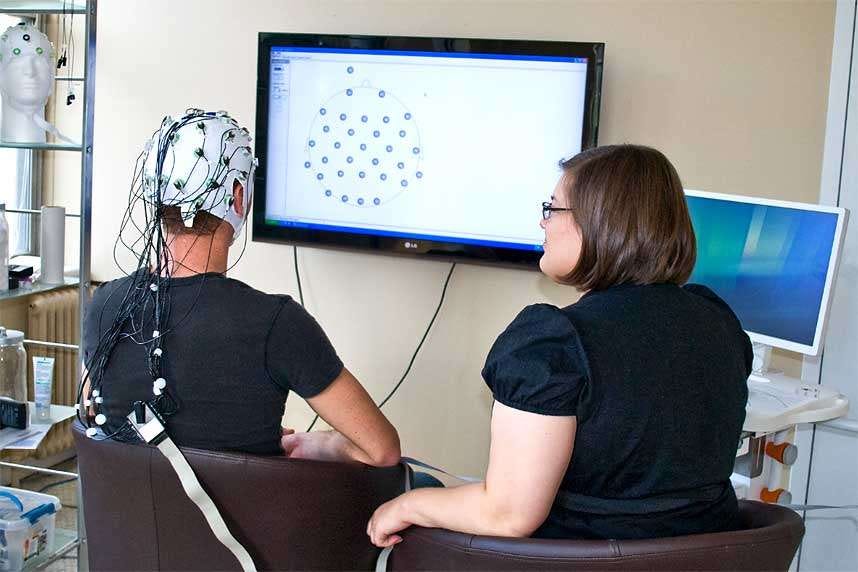
BCI-based rehabilitation is framed as a “closed-loop” approach that links a patient’s brain activity to contingent feedback, aiming to reinforce beneficial neuroplasticity. The paper explains that non-invasive BCIs—especially EEG-based systems—are common in rehabilitation because they are relatively safe and portable. In a typical paradigm, patients attempt or imagine movements; neural signals are decoded; and the system triggers feedback such as functional electrical stimulation (FES), robotic assistance, or visual/virtual feedback, thereby coupling intention-related brain activity with sensory-motor consequences.
Methodologically, the review followed PRISMA 2020 guidance and was registered on PROSPERO, which strengthens transparency and reduces risk of selective reporting.
The authors searched PubMed, Cochrane Library, and Web of Science for randomized controlled trials published up to September 15, 2024.
To be included, studies had to be RCTs in stroke survivors with upper-limb motor dysfunction, with an experimental intervention involving BCI-based training (e.g., BCI-FES, BCI-robot, or BCI-visual feedback) compared against sham BCI and/or conventional rehabilitation, and reporting the Fugl–Meyer Assessment for Upper Extremity (FMA-UE) as a required outcome.
Risk of bias and methodological quality were assessed using the PEDro scale and the Cochrane risk-of-bias items, and the certainty of evidence across outcomes was summarized with GRADE.
In total, 21 RCTs involving 886 participants met eligibility and were included in the meta-analysis.
Across pooled analyses, BCI-based training showed statistically significant improvements in upper-limb motor impairment and function. The primary outcome, FMA-UE, improved with a mean difference (MD) of 3.69 points versus control (95% CI 2.41–4.96), and the authors rated this asmoderate-quality evidence.
For motor function, the Wolf Motor Function Test (WMFT) improved (MD 5.00, 95% CI 2.14–7.86;low-quality evidence), and the Action Research Arm Test (ARAT) also improved (MD 2.04, 95% CI 0.25–3.82;high-quality evidence).
The pattern suggests that BCI training can produce clinically meaningful gains, particularly in impairment-level measures (FMA-UE) and some functional tests (ARAT/WMFT), though confidence is not uniform across outcomes.
The authors also assessed activities of daily living using the Modified Barthel Index (MBI). In the main pooled analysis, MBI did not show a statistically reliable improvement (MD 7.46, 95% CI −0.29 to 15.22), with substantial heterogeneity, indicating that impairment/function gains do not always translate quickly into greater independence in daily activities (or that available studies were too inconsistent to detect it robustly).
Consistent with this, the discussion notes that ADL scales capture broad independence rather than a single limb domain, and that functional improvements may not yet have generalized to everyday use during the follow-up windows used in many studies.
A major contribution of the paper is its subgroup work aimed at identifying “who benefits” and “how to deliver” BCI programs. Regarding stroke phase, BCI-based training significantly improved FMA-UE in both subacute and chronic stroke survivors: subacute MD 4.24 (95% CI 1.81–6.67) and chronic MD 2.63 (95% CI 1.50–3.76).
This supports the idea that BCI-based, intention-linked training may be helpful not only during the early recovery window but also later, potentially by promoting cortical reorganization and overcoming plateaus.
Regarding feedback modality, the meta-analysis found significant FMA-UE benefits when BCIs were paired with FES (MD 4.37), robotic devices (MD 2.87), or visual feedback (MD 4.46), though the precision varied by subgroup.
Importantly, when the authors examined feedback typewithinstroke phases, BCI-FES showed significant benefit in both subacute and chronic patients, while BCI-robot appeared beneficial in chronic patients but not convincingly in subacute groups.
In the discussion, the authors interpret this as potentially reflecting richer proprioceptive and somatosensory input (and voluntary contraction facilitation) with FES, whereas robotic effects may depend more strongly on device design and protocol details.
The review goes further than many prior syntheses by explicitly analyzing training intensity and offering practical dose recommendations. The authors pre-defined multiple intensity categories (minutes per day, sessions per week, total sessions, and total program weeks) and used FMA-UE as the shared endpoint for these comparisons.
Overall, their subgroup patterns suggest that very short daily training (<20 minutes) and very long daily protocols (around 90 minutes) were not consistently associated with improvements, whereas moderate ranges (20 minutes; 30–40 minutes; and ~60 minutes) more often showed benefits.
For weekly frequency, both 2–3 sessions/week and 5 sessions/week were associated with significant improvements.
For program length, 3–4 weeks stood out as a subgroup with significant benefit, while <2 weeks and >4 weeks did not show clear pooled improvements in their analyses.
Based on these results, the paper offers a “tentative” clinical suggestion:daily training sessions of roughly 20–90 minutes, 2–5 sessions per week, for about 3–4 weeksmay be a favorable schedule for many patients.
The authors also discuss secondary considerations relevant to implementation. They report that several included studies assessed spasticity with MAS/AS and consistently found no additional spasticity benefit compared with controls, implying BCI-based training may not directly address spasticity and might need to be paired with targeted approaches when spasticity is a dominant barrier.
They also note that BCI accuracy and signal detection are crucial—stroke-related cortical signal changes can reduce decoding performance—and they highlight directions like improved algorithms, user training, sensor fusion, and potentially pairing BCI with non-invasive brain stimulation (e.g., tDCS/rTMS) to enhance BCI performance and clinical impact.
Finally, the paper is careful about limitations. The evidence base, while growing, remains relatively small (21 trials), and some subgroup analyses included fewer than the recommended number of trials, which increases uncertainty around “best protocol” claims.
The authors also acknowledge that publication bias is a concern (their funnel plot appeared asymmetric), and that medication interactions were not analyzed due to insufficient reporting, limiting how confidently findings can be translated into all clinical contexts.
In summary, this meta-analysis concludes that BCI-based training is an effective rehabilitation strategy for improving post-stroke upper-limb motor impairment and, to a lesser extent, motor function, with especially promising results when BCIs are combined with FES and delivered at moderate intensities over a 3–4 week program.
The work provides actionable guidance for clinicians and researchers—while emphasizing the need for more high-quality, standardized trials with robust subgroup coverage and longer follow-up to clarify durability and real-world functional transfer.