
Artificial Intelligence in Physical Medicine: Enhancing Clinical Decision-Making
Transforming Diagnostics, Personalized Rehabilitation, and Patient Monitoring Through AI Integration

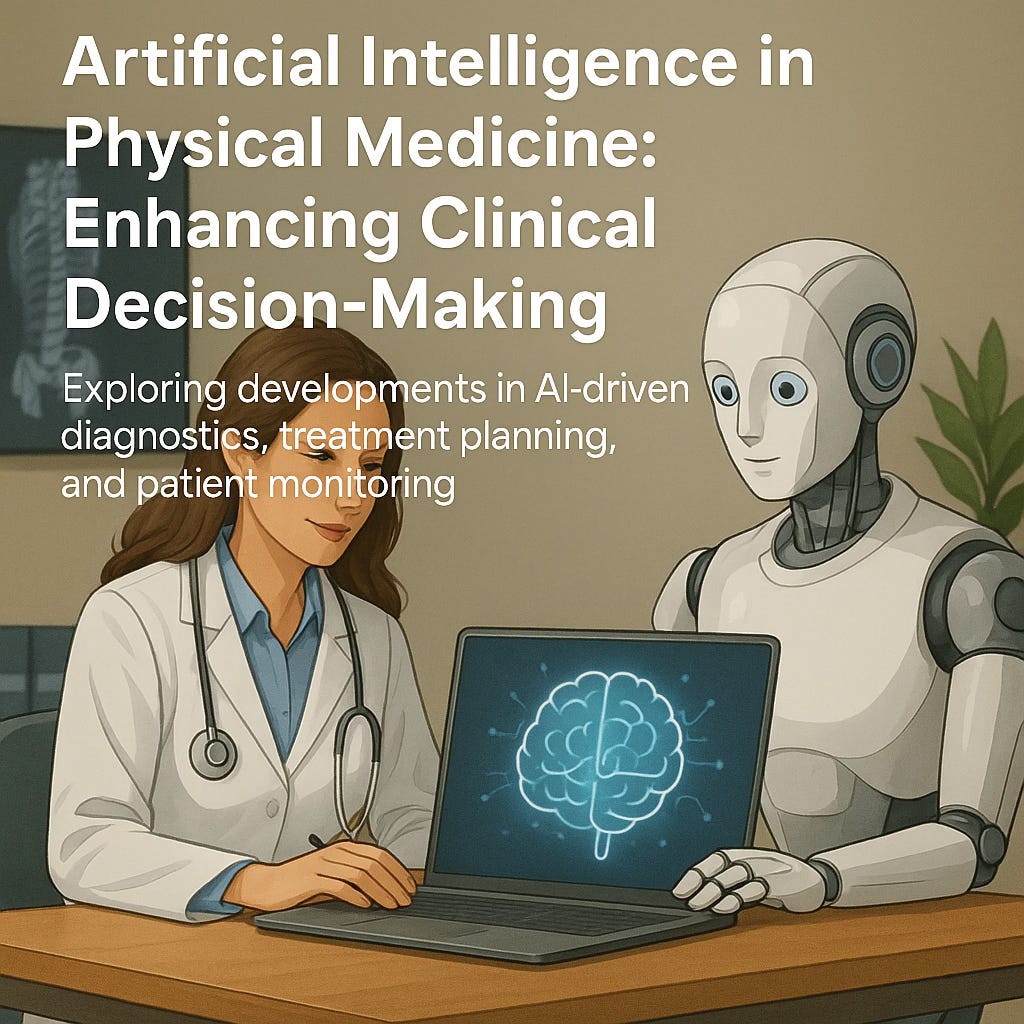
Artificial Intelligence (AI) is no longer a futuristic concept—it is actively reshaping how physiatrists approach patient care. In Physical Medicine and Rehabilitation (PM&R), AI tools are increasingly being used to enhance diagnostics, support treatment planning, and monitor patient outcomes with greater precision. As the field evolves, AI’s integration offers exciting opportunities to improve clinical efficiency and personalize rehabilitation strategies.
AI in Diagnostics: Making Sense of Complex Data
Physical medicine often involves analyzing a wide range of clinical information, from electromyography (EMG) and imaging studies to gait analysis and functional assessments. AI algorithms can process and interpret this data quickly and accurately:
Medical Imaging Analysis: AI enhances the identification of musculoskeletal abnormalities on MRI, CT, and ultrasound, offering early and precise diagnoses of issues such as spinal stenosis or joint degeneration.
EMG and Nerve Conduction Studies: Machine learning models can assist in detecting patterns associated with neuromuscular disorders, reducing interpretation errors and enhancing diagnostic confidence.
Predictive Analytics: AI can forecast rehabilitation outcomes based on patient demographics, comorbidities, and baseline function, helping physiatrists set realistic goals.
AI in Treatment Planning: Supporting Personalized Rehab
Every patient’s rehabilitation journey is unique. AI tools can help tailor interventions to meet individual needs, ensuring better adherence and improved outcomes.
Rehabilitation Pathway Optimization: AI can analyze data to recommend the most effective combination of therapies (e.g., physical therapy, occupational therapy, or assistive technologies) for specific conditions.
Real-Time Biomechanical Feedback: AI-powered motion capture systems provide immediate feedback on posture, gait, or movement quality, helping patients improve performance during sessions.
Virtual Coaches and Chatbots: These AI-driven platforms provide guidance and motivation between visits, encouraging consistency in home exercise programs.
AI in Patient Monitoring: Driving Proactive Care
Monitoring patients between visits is crucial for continuity and success. AI excels at identifying subtle trends and potential setbacks early:
Wearable Technology Integration: AI interprets data from wearables (e.g., step counters, heart rate monitors) to assess activity levels, sleep, and vitals, enabling proactive adjustments to treatment.
Remote Patient Monitoring Systems: These systems alert clinicians to potential problems such as falls, reduced activity, or pain flares—facilitating early interventions.
Natural Language Processing (NLP): AI tools that analyze patient-reported outcomes, digital logs, or feedback from telehealth platforms can help track mental and physical progress over time.
Challenges and Ethical Considerations
While AI offers many benefits, it also introduces challenges that physiatrists must navigate:
Data Privacy: Ensuring patient information is protected is paramount.
Bias and Equity: Algorithms must be trained on diverse populations to avoid biased outcomes.
Clinician Oversight: AI should augment—not replace—clinical judgment. Human expertise remains central to patient-centered care.
The Physiatrist’s Evolving Role
As AI becomes more integrated into clinical workflows, physiatrists must adapt by:
Learning to interpret and validate AI-generated recommendations.
Collaborating with data scientists and engineers to refine tools.
Staying informed on regulatory and technological updates in digital health.
Conclusion
Artificial Intelligence is transforming the practice of physical medicine by streamlining diagnostics, personalizing treatment plans, and enhancing patient monitoring. While its use requires careful implementation, AI holds the promise of more efficient, accurate, and patient-centered rehabilitation. Physiatrists who embrace these innovations are poised to lead the future of functional recovery and improved quality of life.